
Sculptra Explained
Sculptra is not a filler. It is injected like one and usually sits on the same price list, but it works in a different way, on a different timescale, and judging it by filler expectations is how most disappointment with it starts.
I use Sculptra a great deal at my Marylebone clinic, usually as the foundation of a longer-term plan rather than a one-off treatment. Here is how it works, what the evidence shows, what can go wrong, and who I think it suits.
What Sculptra is
Sculptra is poly-L-lactic acid, or PLLA, from the same family of materials as dissolvable stitches. It comes as a powder that is mixed with sterile water and local anaesthetic, then injected into the layer just under the skin.
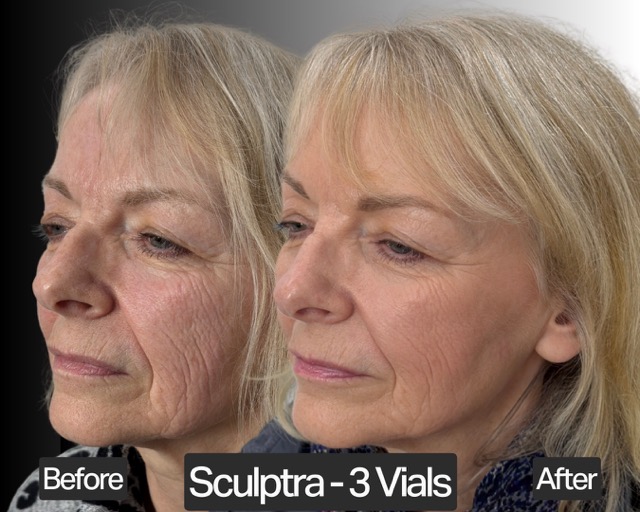
A hyaluronic acid filler works by occupying space: it adds volume the moment it goes in. PLLA does almost nothing on the day. Instead, the microscopic particles act as a prompt to your own repair cells, which respond over the following months by laying down fresh collagen. Biopsy studies show new type I collagen, the structural protein skin gradually loses from our mid twenties onwards, at three and six months after treatment.
So the volume you eventually see is not a product sitting in your face. It is your own tissue, rebuilt. That is why the results look natural: they are made of the same material as the rest of you.
Why you look fuller on day one, then don’t
This catches people out, so I explain it at every consultation. The water used to prepare Sculptra creates a temporary plumpness that lasts two or three days, then disappears as the fluid is absorbed. That early preview is not the result. The real change builds gradually from around six weeks and continues for three to six months.
If nobody warns you about this, day three feels like the treatment has failed. It has not. It has barely started.
What the evidence shows
The evidence for Sculptra is randomised trial evidence, not just before-and-after photographs. A randomised trial published in 2024, run across 13 clinics, found that around 7 in 10 people treated with Sculptra showed meaningful improvement in cheek wrinkles a year later, compared with roughly 1 in 4 in the untreated group. An earlier trial of more than 230 people found the improvement was still measurable more than two years after treatment. In my experience two years is a reasonable expectation, sometimes longer, though results vary.
Side effects and the nodule question
Every treatment has side effects, and I would rather list them here than have you find them on a forum afterwards. The common ones are bruising, swelling and tenderness at the injection points, usually settling within a few days. Most people go straight back to work.
The complication Sculptra is known for is small lumps, or nodules, under the skin. Older studies reported them in as many as 1 in 20 patients, and that reputation still follows the product around. What changed is the technique. The early protocols used a low dilution, a short mixing time and placement within the skin itself. Modern practice uses a much higher dilution, longer hydration and placement underneath the skin, and the largest real-world safety review, covering just over 1,000 patients and nearly 4,500 treatments, reported nodules in fewer than 1 in 200, with everything recorded being mild.
My own protocol follows the higher-dilution approach: I hydrate the product for at least two days before use and place it under the skin, not within it, consistent with the safety evidence. In areas such as the temples I also use ultrasound guidance, so I can see exactly where the product is going.
Unlike hyaluronic acid fillers, Sculptra cannot be dissolved. That is the strongest argument for treating gradually and conservatively, and it is why I would rather add a vial at a later session than overtreat at the first.
Who it suits, and who it doesn’t
The ideal candidate has gradual, age-related volume loss, wants an improvement that nobody can quite put their finger on, and is happy to wait months for it. Most of my Sculptra clients are in their forties, fifties and sixties.
It is the wrong treatment if you want a change in time for an event next month; the timeline does not bend. I have also heard Sculptra described as a liquid facelift, which is language I am always cautious about. Where skin laxity is severe, no injectable will do what surgery does, and I would rather say so at consultation than sell you vials.
How I use it in practice
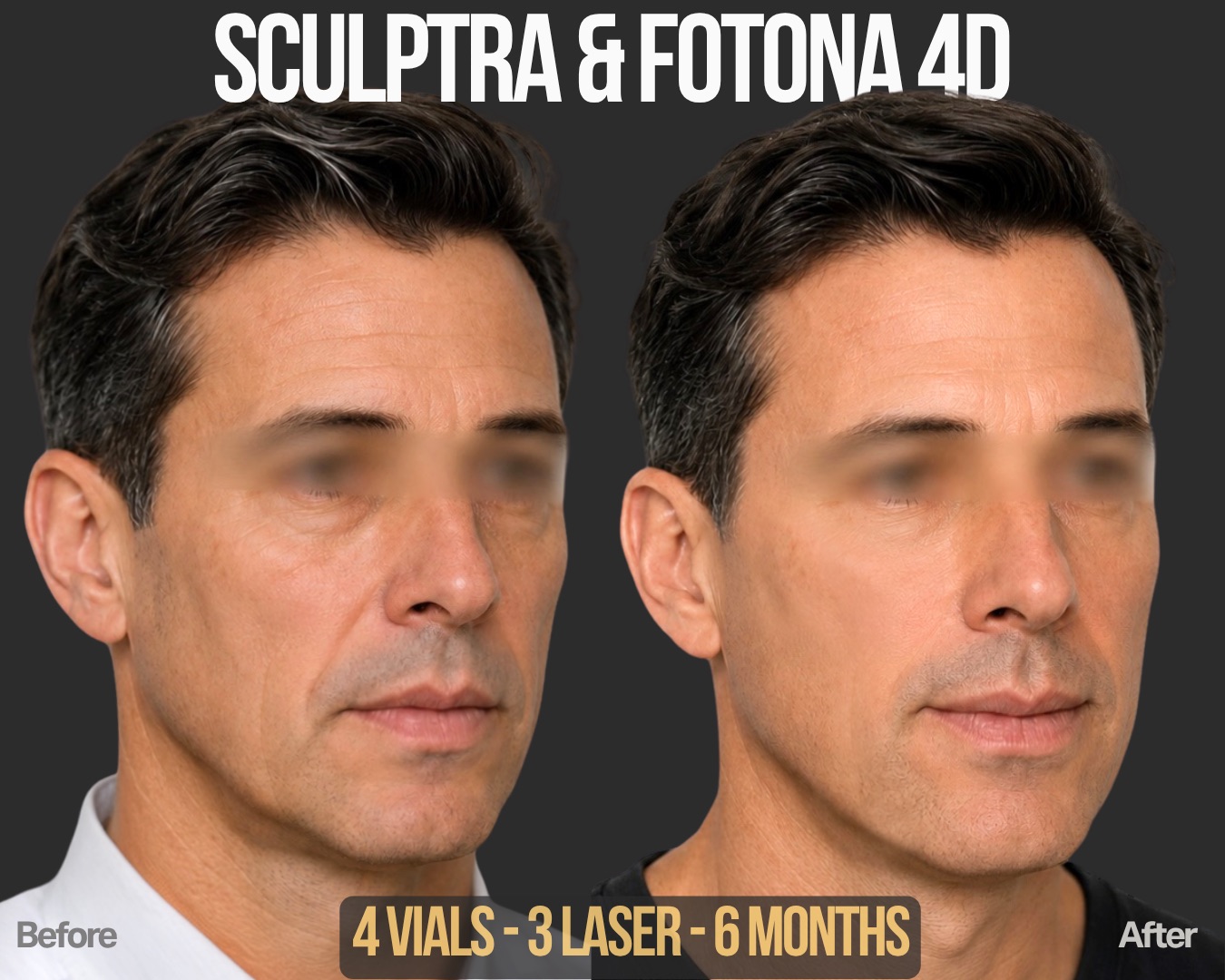
Sculptra rarely works alone in my planning. In the combination approach I use at the clinic, it is usually the foundation layer that rebuilds volume and collagen, with laser treating skin quality at the surface and a small amount of filler only where defined structure is needed. Treatments that complement each other, in the right order, produce results that a single treatment cannot.
Practically, most plans involve two to three sessions spaced about a month apart. Mild volume loss may need only one or two vials; fuller facial rejuvenation needs more, and I will tell you at consultation how many your face needs, including if the answer is fewer than you expected. After each session you massage the treated areas following the rule of fives: five minutes, five times a day, for five days, which helps distribute the product evenly. Treatment starts from £500.
If you are considering Sculptra and want to know whether it fits your face rather than the average face, a consultation is the place to start. You can book through the website or call the clinic on 0203 916 650
0.
Owen Thomas
Dr. Owen Thomas has been a medical doctor for over 26 years since qualifying from Cardiff in 1999, now specialising in aesthetics in Marylebone, London. After a 2 year course in injectable aesthetic treatments training at Harley Academy, and additional study with Empire Medical Training in the US and other experts renowned in their field, he won a scholarship in the prestigious Aesthetic Intelligence Fellowship run over 7 months in Kensington, London and Paris, coming top of his cohort. He now specialises in combined treatments for rejuvenation including laser and biostimulators to naturally rejuvenate the maturing face, for a natural and long-lasting benefit.